DSL 인터페이스
DSL을 제공할 수 있도록 설계된 인터페이스들에 대해서 기술합니다.
전체 구조
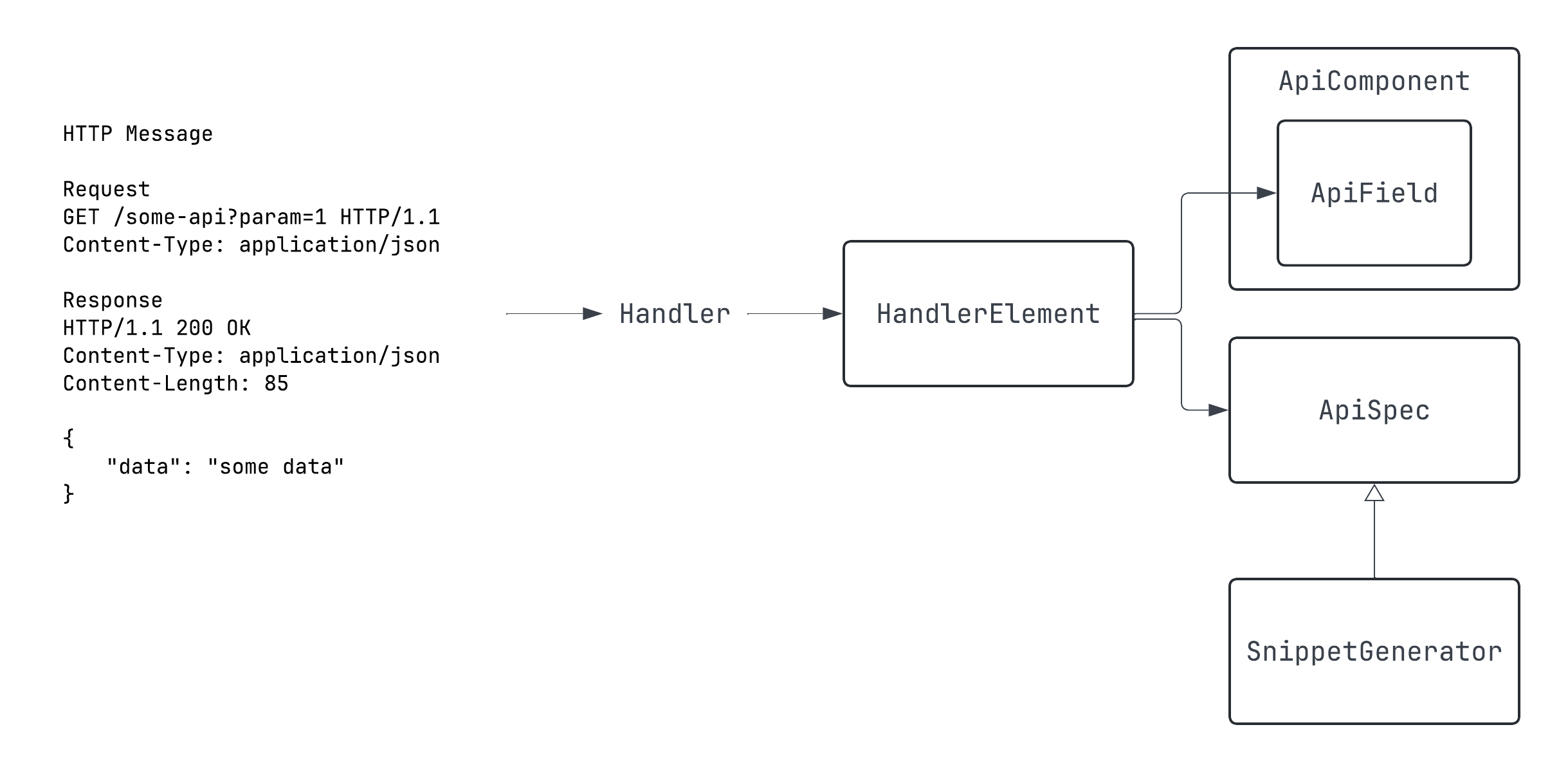
Spring MVC는 핸들러를 통해 HTTP 요청과 응답을 매핑합니다. 그리고 HTTP 요청과 응답을 구성하는 컴포넌트들(쿼리 파라미터, 경로변수, 바디 등)은 핸들러의 어노테이션, 파라미터, 리턴타입으로 매핑합니다. 그리고 Spring REST Docs는 각 컴포넌트들을 구성하는 필드에 대해 설명을 작성하고, 이를 통합하여 문서화 할 수 있도록 도와줍니다.
Spring REST Docs에서는 각 컴포넌트들을 구성하는 필드에 대한 설명을 AbstractDescriptor로서 표현하고, 이를 Snippet으로 통합하고 있습니다.
그리고 통합된 Snippet은 문서의 식별자(identifier)와 함께 document함수를 통해
API 호출 결과를 핸들링하여 최종적으로 asciidoc 등의 형식으로 스니펫을 생성합니다.
이 라이브러리는 DSL을 제공함과 동시에 이러한 Spring REST Docs의 구조에 맞추기 위해
AbstractDescriptor에 대응되는 ApiField, Snippet에 대응되는 ApiComponent,
그리고 하나의 API에 대해 모든 Snippet을 통합하는 ApiSpec,
작성된 DSL을 Snippet으로 변환시켜주는 SnippetGenerator 총 4가지의 인터페이스를 만들어 놓았습니다.
그리고 DSL을 제공하진 않지만, 핸들러를 구성하는 요소들을 ApiField로 변환할 수 있도록
각 요소의 정보를 담는 HandlerElement라는 인터페이스도 있습니다.
하나의 HTTP API 예시를 들어 이 4가지 인터페이스에 대해 쉽게 파악해봅시다.
HTTP Message

Request
GET /some-api?id=abc&num=5 HTTP/1.1
Content-Type: application/json

Response
HTTP/1.1 200 OK
Content-Type: application/json
Content-Length: 85
{
    "data": "some data"
}
위와 같은 메시지로 통신되는 API가 있다고 해봅시다. 여기서 메시지를 구성하는 컴포넌트와 필드를 추출하면 아래와 같습니다.
| 컴포넌트 | 필드 |
|---|---|
| 쿼리 파라미터 | id, num |
| 응답 바디 | data |
ApiField는 위 표에 작성된 필드에 대해 문서를 작성할 수 있는 DSL 인터페이스 입니다.
그리고 이러한 ApiField타입의 프로퍼티를 각 컴포넌트 별로 통합해놓는 인터페이스가 바로 ApiComponent입니다.
그리고 생성된 ApiComponent가 어떤 컴포넌트인지에 따라 적합한 SnippetGenerator를 ApiSpec 구현체에서 구현하여 DSL 함수를 호출할 수 있게 됩니다.
확인을 위해 API를 핸들러로 매핑한 후 생성되는 ApiComponent구현체와 ApiField타입의 프로퍼티를 확인해봅시다.
public object ExampleApiResponseBody : BodyComponent(false) {
  public val `data`: JsonField = JsonField("data", false, 0)

  init {
    addFields(
      `data`
    )
  }
}

public object ExampleApiQueryParameter : ApiComponent<ParameterDescriptor>() {
  public val id: QueryParameterField = QueryParameterField("id")

  public val num: QueryParameterField = QueryParameterField("num")

  init {
    addFields(
      `id`,
      `num`
    )
  }
}
ExampleApiResponseBody, ExampleApiQueryParameter총 두 개의 ApiComponent구현체가 생성되었으며,
각각 필드를 ApiField 구현체 타입의 프로퍼티로 가지고 있는 것을 확인할 수 있습니다.
그리고 이렇게 생성된 ApiComponent들은 SnippetGenerator구현체의 타입 파라미터로 선언되고,
이를 ApiSpec구현체에서 구현하여 각 컴포넌트 별로 적합한 DSL 함수를 호출할 수 있게 됩니다.
한번 그 아래에 생성된 ApiSpec을 살펴봅시다.
public data class ExampleApiSpec(
  override val identifier: String,
) : ApiSpec,
    ResponseBodySnippetGenerator<ExampleApiResponseBody>,
    QueryParameterSnippetGenerator<ExampleApiQueryParameter> {
  override val snippets: MutableList<Snippet> = mutableListOf()

  override fun getResponseBodyApiComponent(): ExampleApiResponseBody = ExampleApiResponseBody

  override fun getQueryParameterApiComponent(): ExampleApiQueryParameter = ExampleApiQueryParameter

  override fun addSnippet(generatedSnippet: Snippet) {
    this.snippets.add(generatedSnippet)
  }

  override fun addSnippets(generatedSnippets: List<Snippet>) {
    this.snippets.addAll(generatedSnippets)
  }
}
해당 HTTP API는 쿼리 파라미터, 응답 바디만을 가지고 있었기 때문에 이에 상응하는 SnippetGenerator구현체를 ApiSpec구현체인 ExampleApiSpec에서 구현하고 있습니다.
SnippetGenerator 구현체는 각각 적합한 이름의 함수를 가지고 있으며, 위 예시에 등장하는 ResponseBodySnippetGenerator는 responseBody,
QueryParameterSnippetGenerator는 queryParameters라는 이름의 함수를 가집니다.
interface QueryParameterSnippetGenerator<C: ApiComponent<ParameterDescriptor>> : SnippetGenerator {

    fun queryParameters(dsl: C.() -> Unit) {
        ...
    }
    ...
}

interface ResponseBodySnippetGenerator<C: BodyComponent> : SnippetGenerator {

    fun responseBody(dsl: C.(element: C) -> Unit) {
        ...
    }
    ...
}
이 함수들은 모두 타입 파라미터로 선언된 타입을 수신객체로 가지는 함수를 파라미터로 가지고 있습니다.
이 타입 파라미터는 ApiComponent 타입이며, ApiComponent는 ApiField타입의 프로퍼티를 멤버로 가지고 있기 때문에
해당 함수 블록에서 ApiField타입의 프로퍼티를 통해 필드 DSL을 호출할 수 있게 됩니다.
HTTP 컴포넌트 DSL
앞서 살펴봤듯 HTTP 요청 및 응답을 구성하는 HTTP 컴포넌트들은 SnippetGenerator 구현체의 함수를 통해 DSL을 작성할 수 있습니다.
| HTTP 컴포넌트 | 구현체 | 함수명 |
|---|---|---|
| 요청 경로변수 | PathVariableSnippetGenerator | pathVariables |
| 요청 파라미터 | QueryParameterSnippetGenerator | queryParameters |
| 요청 헤더 | RequestHeaderSnippetGenerator | requestHeaders |
| 요청 쿠키 | RequestCookieSnippetGenerator | requestCookies |
| 요청 파트 | RequestPartSnippetGenerator | requestParts |
| 요청 바디 | RequestBodySnippetGenerator | requestBody |
| 응답 헤더 | ResponseHeaderSnippetGenerator | responseHeaders |
| 응답 쿠키 | RequestCookieSnippetGenerator | responseCookies |
| 응답 바디 | ResponseBodySnippetGenerator | responseBody |
만약 API를 구성하는 컴포넌트가 요청 헤더, 요청 및 응답 바디만 있다면ApiSpec의 구현체는
RequestHeaderSnippetGenerator, RequestBodySnippetGenerator, ResponseBodySnippetGenerator를 구현하게 됩니다.
따라서 아래와 같이 DSL 함수를 호출할 수 있게 됩니다.
document(SimpleUsageApiSpec("simple-usage")) {
    requestHeaders { ... }
    requestBody { ... }
    responseBody { ... }
}
필드 DSL
앞서 살펴봤듯 HTTP 컴포넌트를 구성하는 필드는 ApiField타입의 프로퍼티로 처리하고 있으며,
Spring REST Docs의 AbstractDescriptor와 대응됩니다.
responseBody {
    result means "Whether the login was successful" typeOf STRING formattedAs "Success or Failure"
    status means "User's status" typeOf ENUM(UserStatus::class)
}
위 예시는 "result"와 "status"라는 필드를 DSL을 사용해서 문서화 하는 예시입니다.
중위 함수를 사용하며, 모든 함수는 ApiField 자신을 리턴하기 때문에 체이닝이 가능합니다.
호출 가능한 중위함수
| 함수명 | 설명 | 파라미터 타입 |
|---|---|---|
means | 필드에 대한 설명을 나타내기 위해 사용합니다. AbstractDescriptor.description과 상응됩니다. | String |
typeOf | 필드의 타입을 나타내기 위해 사용합니다. org.springframework.restdocs.payload.FieldDescriptor.type과 상응됩니다. FieldDescriptor 타입이 아니면, formattedAs 함수의 파라미터로 전달됩니다. | ApiFieldType |
formattedAs | 주어진 format 문자열을 AbstractDescriptor.attributes의 format 키에 추가합니다. | String |
isIgnored | 해당 필드를 문서화하지 않고 무시합니다. org.springframework.restdocs.snippet.IgnorableDescriptor.ignored에 상응됩니다. | Boolean |
isOptional | 해당 필드의 필수성을 나타내기 위해 사용합니다. 각 AbstractDescriptor구현체의 optional()에 상응됩니다. | Boolean |
ApiFieldType
이 클래스는 JsonFieldType을 Wrapping하는 클래스로, 자주 지정하는 형식들을 간단하게 문서화 할 수 있도록 도와줍니다.
open class ApiFieldType(
    val fieldType: JsonFieldType,
    open val customFormat: String? = null
)

data object ARRAY: ApiFieldType(JsonFieldType.ARRAY)
data object BOOLEAN: ApiFieldType(JsonFieldType.BOOLEAN)
data object OBJECT: ApiFieldType(JsonFieldType.OBJECT)
data object NUMBER: ApiFieldType(JsonFieldType.NUMBER)
data object NULL: ApiFieldType(JsonFieldType.NULL)
data object STRING: ApiFieldType(JsonFieldType.STRING)
data object ANY: ApiFieldType(JsonFieldType.VARIES)
data object DATE: ApiFieldType(JsonFieldType.STRING, "yyyy-MM-dd")
data object DATETIME: ApiFieldType(JsonFieldType.STRING, "yyyy-MM-ddTHH:mm:ss")
각 ApiFieldType 구현체들은 typeOf함수를 구현때 ApiFieldType의 customFormat 프로퍼티의 값을 format 속성으로 추가해줍니다.
override infix fun typeOf(type: ApiFieldType): JsonField {
    descriptor.type(type.fieldType)
    if (type.customFormat != null) descriptor.format(type.customFormat!!)
    return this
}
JsonField에서 구현한 함수입니다. DATE, DATETIME과 같은 customFormat이 있는 오브젝트인 경우에는 format 속성에 해당 값이 추가됩니다.
data object UUID: ApiFieldType(JsonFieldType.STRING, "UUID format")
만약 프로젝트에서 자주 사용하는 커스텀한 형식이 있다면, 위와 같이 ApiFieldType을 상속받아서 직접 만들어보세요.
data class ENUM<T : Enum<T>>(
    val enums: Collection<T>,
    override val customFormat: String? = enums.joinToString(", "),
) : ApiFieldType(JsonFieldType.STRING) {

    constructor(
        clazz: KClass<T>,
        filter: (T.() -> Boolean)? = null
    ) : this(
        enums = clazz.java.enumConstants.asList().let {
            if (filter != null) it.filter(filter) else it
        },
    )

}
Enum 타입에 대해서도 편의 객체를 제공합니다. 문서화 하는 경우에도 편리하게 할 수 있습니다.
enumValue means "enum" typeOf ENUM(listOf(EnumExample.A, EnumExample.B))
enumValue means "enum" typeOf ENUM(EnumExample::class) { isA() || isB() }
두 개의 생성자를 통해서 가능한 형식을 지정할 수 있습니다. 첫 번째 줄은 직접 가능한 값들만 리스트로 제공하는 방식이며, 두 번째 줄은 해당 Enum에 정의된 함수를 호출하여 가능한 값들만 필터링하는 방식입니다.
중첩된 JSON 필드
JSON 데이터의 필드는 문자열, 숫자 등과 같이 단일 값을 가질 수도 있지만, 객체 혹은 객체 리스트 처럼 중첩된 필드를 가지는 데이터를 표현할 수도 있습니다.
Spring REST Docs에서는 이러한 중첩 필드 역시 subsectionWithPath, beneathPath를 사용하여 문서화 할 수 있었습니다.
하지만 이 라이브러리는 더 우아한 방식으로 중첩 필드의 문서화를 지원합니다.
만약 필드가 중첩된 필드라면 NestedJsonField, NestedArrayJsonField 타입으로 프로퍼티가 선언됩니다.
NestedArrayJsonField는 NestedJsonField를 상속받고 있으며, 이 클래스는 of함수를 통해 중첩된 객체에 대한 DSL을 작성할 수 있습니다.
responseBody {
    result means "Whether the login was successful" typeOf STRING formattedAs "Success or Failure"
    status means "User's status" typeOf ENUM(ExampleController.SimpleResponse.UserStatus::class)
    detail means "User's detail information" typeOf OBJECT of {
        userId means "User's id" typeOf STRING
        password means "User's password" typeOf STRING isIgnored true
        profileMessage means "User's profile message" typeOf STRING isOptional true
    }
}
위 예시에서 "detail" 필드는 객체 타입의 중첩 필드입니다.
이 경우, 해당 필드가 가지는 필드들을 위와 같이 of 함수를 통해 문서화 할 수 있습니다.
infix fun of(nestedFieldDetailDsl: E.() -> Unit) {
    nestedElement.nestedFieldDetailDsl()
}
of 함수는 타입 파라미터를 수신 객체로 가지는 함수를 파라미터로 가집니다.
여기서 타입파라미터 E는 ApiComponent의 구현체로, 중첩된 객체의 필드들을 JsonField타입의 프로퍼티로 가지고 있는 클래스입니다.
한번 생성된 ApiComponent 구현체를 살펴봅시다.
public object SimpleUsageApiResponseBody : BodyComponent(false) {

  ...

  public val detail: NestedJsonField<SimpleDetail_0> = NestedJsonField("detail", SimpleDetail_0,
      false, 0)

  ...

  public object SimpleDetail_0 : BodyComponent(false) {
    public val userId: JsonField = JsonField("userId", false, 0)

    public val password: JsonField = JsonField("password", false, 0)

    public val profileMessage: JsonField = JsonField("profileMessage", false, 0)

    ...

  }
}
detail 프로퍼티는 NestedJsonField타입으로 선언되어 있고,
타입 파라미터로는 SimpleDetail_0이라는 클래스가 인자로 들어가 있습니다.
SimpleDetail_0은 중첩된 필드를 프로퍼티로 가지는 BodyComponent의 구현체이기 때문에
여타 다른 JSON 데이터를 문서화하는 것과 동일하게 DSL을 사용할 수 있습니다.